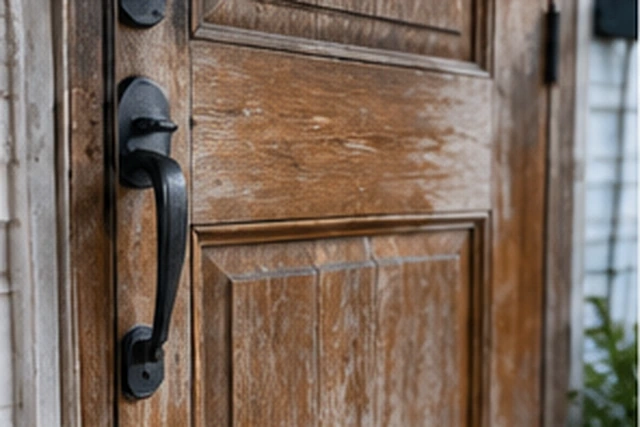
An aging entrance does not automatically need to be replaced‚ and a door that still opens is not automatically worth preserving. The useful decision comes from evaluating how the complete system is performing: leaf condition‚ frame integrity‚ hinges‚ locks‚ closers‚ seals and the amount of intervention required to keep everything aligned.
Where the opening remains structurally sound but has localized wear‚ door repair may restore reliable function without unnecessary work. The assessment should focus on condition and expected service life rather than age alone.
Structural condition before cosmetic appearance
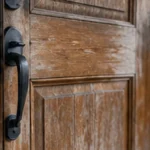
Paint‚ dents and surface wear are easy to see‚ but they do not always determine whether an entrance remains serviceable. A cosmetically tired door can still have a stable frame and dependable hardware.
The opposite is also possible. A door may look acceptable while the frame has loosened or the hinge mounting points have deteriorated.
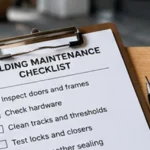
A useful inspection checks whether the leaf remains square‚ whether the frame holds securely and whether the latch reaches the strike without forcing.
Repair history as part of the decision
One adjustment after years of use is different from a door that needs attention every few months. Repeated service can indicate that the opening is approaching the point where broader work becomes more practical.
Where several components are worn and compatible parts are difficult to source‚ door replacement may offer better long-term reliability than continuing to address isolated failures.
- Repeated Alignment Changes suggest continuing movement.
- Multiple Hardware Failures can indicate accumulated fatigue.
- Unavailable Parts may increase the cost of maintaining an older system.
- Persistent Drafts can show that sealing performance has declined.
- Security Concerns deserve more weight than cosmetic wear.
Frame integrity and long-term stability
The frame is central to the decision because every other component relies on it. A new lock or closer cannot perform properly if the frame no longer provides stable geometry.
Where corrosion‚ rot‚ impact or repeated movement has compromised the supporting structure‚ door frame replacement may be necessary even if the existing leaf could otherwise remain in use.
The frame should be examined at hinge points‚ the strike area and lower sections where moisture damage commonly develops.
Changes in use over the life of the building
An entrance selected decades ago may now serve a different traffic pattern. A low-use opening can become a busy customer entry‚ or a residential door can become part of a renovated mixed-use space.
The decision should consider whether the existing system remains appropriate for its current duty level. Hardware that was sufficient for occasional use may wear rapidly under higher cycle counts.
Accessibility‚ security and energy performance expectations may also have changed since the original installation.
When a new main entrance becomes part of a wider upgrade
Some aging entrances are addressed as part of façade‚ accessibility or security improvements rather than because of a single failure.
Where a new principal entry is planned‚ front door installation can be coordinated with lighting‚ access control‚ weather protection and surrounding finishes.
Planning these elements together helps prevent a new door from being installed into an opening that will immediately require additional modification.
Energy and sealing performance
Older entrances may develop worn weatherstripping‚ threshold gaps and air leakage even while the hardware continues functioning.
Seals can often be renewed‚ but a badly distorted leaf or frame may prevent consistent contact. In those cases‚ energy performance becomes part of the broader condition assessment.
Drafts should be traced to their actual source before assuming that a complete change is necessary. A small threshold or seal defect can create noticeable discomfort without indicating structural failure.
Local building age and condition
Neighbourhoods with a mix of older and newer properties present a wide range of entrance conditions. Previous renovations may have changed frames‚ thresholds and hardware several times.
For properties east of Toronto‚ work such as door repair in Pickering may involve understanding that history before deciding which components should remain and which have reached the end of their useful life.
A decision based on total condition
The best next step is rarely determined by one dent‚ one loose hinge or one number on the calendar. It comes from the combined condition of the leaf‚ frame‚ hardware and surrounding opening.
Lawrence Doors can assess aging entrances across Toronto and the GTA and explain whether targeted work is likely to provide dependable service or whether a broader upgrade makes more sense. A condition-based approach helps avoid both premature replacement and repeated repairs that no longer deliver lasting value.