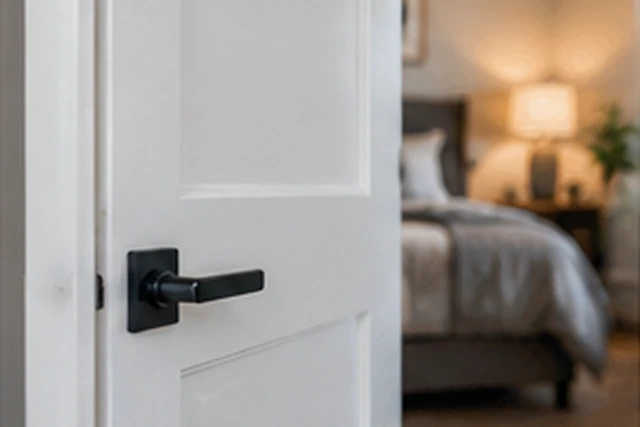
Interior doors are protected from rain‚ snow and direct temperature swings‚ but that does not make them maintenance-free. Their wear patterns are shaped more by traffic‚ privacy hardware‚ repeated impacts‚ building movement and the way rooms are used. An interior opening can therefore develop very different problems from an exterior entrance even within the same property.
Where an indoor leaf begins sticking‚ sagging or failing to latch‚ interior door repair may address hinges‚ frames‚ handles or alignment without the weather-related work often associated with exterior systems.
Traffic patterns inside a building
Interior doors can cycle frequently in offices‚ corridors‚ bedrooms‚ utility areas and shared spaces. The load may be lighter than a commercial exterior entrance‚ but repetition still loosens hinges and handles over time.
Some doors remain open most of the day and close only occasionally. Others cycle constantly. Maintenance needs should reflect that actual use rather than assuming every indoor opening ages at the same rate.
A door near a busy corridor may show hinge wear long before a similar door in a low-use room.
Pocket systems and concealed hardware
Pocket doors present a different maintenance challenge because much of the track and hardware is hidden inside the wall. A roller can loosen or a guide can shift without an obvious visual clue.
When the leaf starts rubbing‚ tilting or falling out of its normal path‚ pocket door repair may involve correcting concealed hardware while minimizing unnecessary disturbance to the surrounding wall.
- New Scraping may indicate roller or guide movement.
- Uneven Gaps can reveal a tilted leaf.
- Loose Pulls may develop from repeated handling.
- Track Noise can signal debris or hardware wear.
- Incomplete Closure may result from alignment rather than the latch.
Residential use and repeated everyday contact
Homes create their own wear patterns. Bedroom and bathroom doors may be operated many times each day‚ while closet or utility doors see different loads.
Where several indoor openings show similar issues‚ residential door repair may involve evaluating hinge wear‚ seasonal indoor humidity and frame movement across the property.
The absence of outdoor exposure makes alignment and hardware history especially important clues.
Locks and privacy hardware
Interior locks are often lighter-duty than exterior security hardware‚ but they still depend on accurate latch alignment. A bathroom latch that stops catching may be reacting to sag or frame movement rather than an internal lock failure.
Where the mechanism itself is worn‚ door lock repair may restore normal operation. Testing the latch with the door open can help separate internal resistance from misalignment at the strike.
Loose handles are also common because indoor hardware is frequently operated quickly and casually.
Humidity without direct weather exposure
Interior wood components can still respond to humidity. Bathrooms‚ laundry areas and basements may experience enough moisture variation to change clearances seasonally.
A door that sticks during humid summer weeks but operates normally in winter may not have a permanent frame problem. Repeated seasonal binding‚ however‚ can wear edges and hardware if the clearances are already tight.
Ventilation and moisture control can therefore be part of the solution rather than treating every symptom mechanically.
Impact and furniture movement
Indoor doors are frequently struck by furniture‚ carts‚ toys or equipment. A modest impact can bend a hinge or loosen a frame connection even when no visible crack appears.
After a significant hit‚ changing gaps and latch alignment should be checked. If the door begins closing differently immediately afterward‚ the incident is useful diagnostic information.
Local housing and building conditions
Interior systems can vary widely between newer homes‚ renovated properties and older buildings with several generations of hardware.
For properties in the northern GTA‚ work such as door repair in Kleinburg may involve understanding those existing conditions rather than applying a single standard solution.
Different exposure‚ same need for stable alignment
Interior doors may avoid snow and salt‚ but they still rely on stable frames‚ sound hinges and dependable hardware. Their symptoms simply develop for different reasons.
Lawrence Doors can assess interior and residential access points across Toronto and the GTA and identify whether wear comes from traffic‚ concealed hardware‚ humidity‚ impact or frame movement. Recognizing those differences makes it easier to choose a focused correction rather than treating an interior opening like an exterior one.