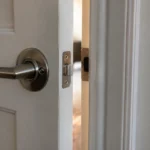

It needs enough final force to latch‚ yet not so much that the entrance slams.
Building pressure‚ wind and seasonal conditions can change this balance. A closer adjusted during mild weather may behave differently during a cold‚ windy week.
Powered openings add sensors and operators to the equation. If movement becomes irregular or safety detection is unreliable‚ automatic door repair may be necessary rather than repeatedly resetting or bypassing the system.
Glass movement and frame condition
Glass storefronts make alignment changes easy to observe. A panel may rattle‚ gaskets can shift or the leaf may sit unevenly relative to fixed glass. These symptoms should not be ignored simply because the glass remains intact.
Where chips‚ cracks‚ loose glazing or door-panel movement develop‚ glass door repair can address the glazing-related problem while the supporting hardware is checked for the cause.
Impact from carts‚ deliveries and equipment is another factor. Even a modest hit can alter a pivot or frame enough to change the closing path.
Thresholds and debris at customer entrances
Busy entrances collect grit‚ moisture and salt. Debris around a threshold or lower pivot can increase resistance and make the closer work harder. Wet conditions can also contribute to corrosion around fasteners and metal edges.
Cleaning should therefore include the mechanical zone rather than only the visible glass. Drainage paths should remain clear and mats should not interfere with the swing or sliding path.
In winter‚ packed slush around the threshold can temporarily change movement. The opening should be cleared before hardware adjustments are made‚ otherwise a temporary environmental problem may be mistaken for a permanent mechanical one.
Security checks at the end of the day
Peak traffic ends‚ but the entrance still needs to secure reliably. A useful closing routine confirms that the latch or lock engages fully‚ the leaf does not rebound and the frame remains stable when normal pressure is applied.
Problems that appear only after hours may have developed gradually during the day. Staff reports can be valuable‚ especially if they note that the door became harder to close after a delivery or began slamming during a windy period.
For properties north-east of Toronto‚ recurring storefront issues may involve work such as door repair in Unionville‚ where local building type and exposure still need to be considered alongside the mechanical symptoms.
A maintenance routine shaped around peak use
The most practical schedule focuses attention where traffic is highest. A quick visual and operational check before opening can identify obvious hazards. Periodic deeper inspections can track looseness‚ wear and changes in alignment.
Lawrence Doors can assess storefront and high-traffic entrances across Toronto and the GTA and identify which components are beginning to wear. Reliable access during peak hours depends on keeping small changes from becoming customer-facing failures‚ and regular observation is often the earliest line of defence.