Busy entrances rarely fail because of a single dramatic event. More often‚ small changes accumulate: a closer begins shutting faster‚ a hinge develops play‚ the latch starts meeting the strike slightly off-centre or winter grit builds around the threshold. A simple preventive routine can identify those changes while the entrance is still operating normally.
When a high-cycle opening shows repeated symptoms‚ commercial door repair may be required‚ but regular observation helps separate ordinary maintenance from developing mechanical problems. The objective is not constant servicing. It is knowing what normal operation looks like and noticing when movement‚ sound or resistance changes.
A baseline for normal operation
Preventive maintenance works best when there is a clear baseline. The door should open without unusual effort‚ move smoothly through its swing‚ decelerate in a controlled way and latch consistently. Gaps should remain reasonably even and hardware should feel secure.
A short monthly check can record whether that behaviour has changed. It does not require dismantling components. In many cases‚ opening and closing the door several times while watching and listening is enough to identify a new symptom.
Useful observations include:
- Opening Effort should remain consistent from one inspection to the next.
- Closing Speed should not suddenly accelerate or become hesitant.
- Latch Engagement should occur without lifting‚ pushing or pulling.
- Hardware Movement should not be visible at hinges or mounting points.
- New Sounds such as grinding‚ clicking or impact deserve investigation.
Closer and operator behaviour
Door closers handle repeated cycles and can drift out of adjustment as conditions change. Oil leakage‚ loose mounting‚ wear and changing building pressure can all affect performance. A closer that once produced a smooth final latch may begin slamming or stopping short.
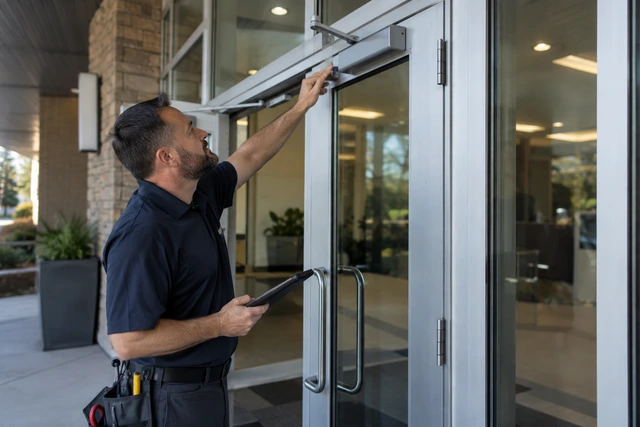
Powered entrances require additional attention because sensors‚ operators and control settings work alongside the mechanical door. Where movement becomes inconsistent‚ automatic door repair may be necessary to restore predictable operation and verify safety functions.
Preventive checks should never involve bypassing sensors or changing safety settings without proper knowledge. The maintenance goal is to notice abnormal behaviour early and keep the operating area clean and unobstructed.
Hinges‚ pivots and mounting points
High traffic places continuous loads on the points supporting the leaf. Loose fasteners‚ metal dust‚ visible play or a change in the perimeter gap can indicate wear before the door becomes difficult to use.
The hinge side should be observed while the leaf moves. Any movement between hardware and frame that was not present previously deserves attention. Heavy leaves can continue functioning despite considerable wear‚ which means visual inspection is important even when users have not reported a problem.
Lubrication requirements vary by hardware type. Applying the wrong product can attract dirt or interfere with manufacturer-approved components‚ so maintenance should follow the specifications of the installed hardware rather than a generic schedule.
Storefront conditions during peak use
Customer-facing entrances often experience highly concentrated cycles. Dirt‚ wet footwear‚ carts and frequent hand contact add to the mechanical load. Glass and aluminum systems may also reveal problems through rattling‚ visible movement or changing clearances.
A practical routine for these openings includes cleaning the threshold‚ checking the strike area and observing whether the leaf returns to the same position after every cycle. If the entrance starts rubbing‚ rebounding or failing to secure‚ storefront door repair can address the mechanical source before temporary workarounds become normal practice.
Propping a problem door open may reduce immediate inconvenience‚ but it can compromise security‚ comfort and energy performance. Preventive maintenance is intended to avoid reaching that point.
Industrial openings and heavier duty cycles
Service and industrial entrances may be less visible to customers‚ but they often receive harder use. Deliveries‚ equipment movement‚ vibration and exposure to dust or moisture can accelerate wear.
For these openings‚ inspection should include evidence of impact‚ damaged edges‚ loose anchors and changes in closing force. Where the system no longer performs reliably under its normal workload‚ industrial door repair may be required to restore stability and controlled operation.
A high-duty opening may also benefit from a shorter inspection interval than a lightly used entrance. Maintenance frequency should reflect actual cycle counts and environmental exposure rather than applying the same schedule to every door in a property.
Thresholds‚ seals and seasonal debris
Lower sections of an entrance collect water‚ salt‚ sand and grit. Debris can increase rolling or swinging resistance‚ hold moisture against metal and interfere with drainage paths.
Toronto winters make this especially important. Salt residue should be cleaned before it contributes to corrosion‚ and packed debris should not be allowed to build around thresholds or tracks. Weatherstripping should remain flexible and seated properly rather than folding into the path of the leaf.
Seasonal changes are also a useful time to review whether the door closes differently in cold‚ humid or windy conditions. A recurring pattern can reveal a marginal alignment or pressure issue that deserves correction.
Records that turn observations into useful information
A maintenance log does not need to be complicated. The value comes from consistency. A few notes can show whether a problem is recurring and whether recent adjustments actually solved it.
Useful records include:
- Inspection Dates and the condition observed.
- Photos Of Wear‚ gaps or impact marks.
- Adjustments And Parts changed during service.
- Reported Symptoms from staff or occupants.
- Seasonal Patterns that affect operation.
For properties in and around Markham‚ recurring issues may lead to work such as door repair in Markham‚ but accurate records can help technicians understand the history instead of diagnosing the opening from a single moment in time.
A routine built around risk rather than habit
Not every entrance needs the same attention. A main public entry that cycles continuously deserves more frequent checks than a rarely used storage-room door. A weather-exposed opening may require seasonal cleaning‚ while an interior controlled-access door may need more emphasis on locks and closers.
Lawrence Doors can assess high-traffic entrances across Toronto and the GTA and help identify which components are showing early wear. A preventive routine cannot eliminate every unexpected failure‚ but it can reduce the number of problems that arrive without warning and help keep access points reliable during the hours they matter most.