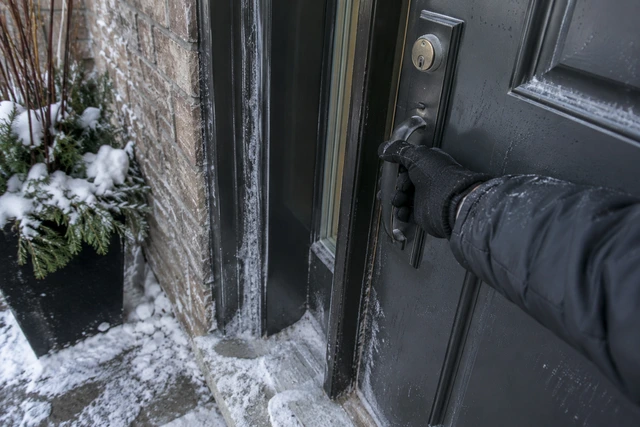
A door that worked normally in October can feel completely different by February. It may drag along the threshold‚ need an extra pull before the latch catches‚ or seem heavier on cold mornings and easier to use after the temperature rises. In Toronto and the GTA‚ those changes are often connected to the way moisture‚ cold‚ road salt and repeated freeze-thaw cycles affect the complete entry system rather than one isolated component.
When the symptoms are still minor‚ early assessment can prevent extra wear. A service such as door repair may address alignment or hardware before repeated forcing damages the latch‚ hinges or surrounding structure. The useful question is not simply why the door sticks‚ but what changed in the relationship between the leaf‚ frame‚ threshold and hardware over the winter.
Seasonal movement throughout the opening
Exterior entrances are assembled from materials that respond differently to temperature and moisture. Metal contracts in cold conditions. Wood can absorb moisture and swell. Sealants become less flexible. Fasteners and pivots are exposed to repeated expansion and contraction as daytime and nighttime temperatures move above and below freezing.
These changes are usually small‚ but door clearances are also small. A shift of only a few millimetres can be enough for the latch to meet the strike at the wrong point or for the bottom edge to begin rubbing. In an opening that was already close to its tolerance limit‚ winter can make the issue suddenly noticeable.
A problem can also appear to come and go. Mild weather may temporarily restore enough clearance for normal movement‚ only for binding to return after another cold spell. That pattern is useful diagnostic information because it suggests seasonal movement rather than a completely random mechanical failure.
Moisture and the freeze-thaw cycle
Water is one of the most important winter factors. Melted snow can reach thresholds‚ lower frames and small joints around an opening. When the temperature falls again‚ trapped moisture freezes and expands. Repetition gradually stresses seals‚ finishes and connections.
Moisture does not have to be visibly pooling to matter. Small amounts can work into gaps around the frame or collect where the threshold meets the floor. Wood components may swell‚ while corrosion can develop on exposed metal hardware. If the frame itself begins to move or loses a secure connection‚ door frame repair may become relevant because adjusting the latch alone will not correct a structural shift.
- Changing Gaps around the perimeter can indicate movement.
- Fresh Scrape Marks often show where contact has developed.
- Intermittent Latching may point to temperature-related alignment changes.
- Visible Moisture near the sill deserves attention before another freeze.
- Loose Hardware can amplify a small seasonal shift.
Salt‚ grit and winter debris
Toronto winters bring more than snow. Salt‚ sand and grit are tracked through entrances and accumulate around thresholds‚ pivots and lower hardware. Fine debris can create friction‚ hold moisture against metal and interfere with components that depend on clean movement.
The effect is especially noticeable at busy entrances where the door cycles frequently. A small amount of resistance may be repeated hundreds of times in a day. Over weeks‚ that added load can accelerate wear on hinges‚ closers and mounting points.
Regular cleaning around the threshold is therefore more than an appearance issue. Salt residue should not be allowed to sit against metal indefinitely‚ and debris should be removed from any moving or drainage area. Where the outer leaf or weather-exposed hardware has deteriorated‚ exterior door repair can address the practical effects of weather exposure without treating every seasonal symptom as a reason for full replacement.
Why the latch often shows the problem first?
A latch is a useful indicator because it depends on precise alignment. The door can still swing almost normally while the latch bolt begins striking slightly high‚ low or to one side of the opening. This is often when people start pulling harder on the handle or pushing the door with a shoulder to make it catch.
That extra force may hide the issue temporarily‚ but it also transfers stress into the lock‚ strike and hinges. A better response is to observe where the latch meets the strike and whether the gap around the leaf remains even. If lifting the handle or pulling the door upward makes the latch work‚ hinge wear or sag may be involved. If the problem changes dramatically with temperature‚ seasonal movement becomes more likely.
The same principle applies to metal-framed systems. In situations involving lightweight metal leaves or frames‚ aluminum door repair may focus on restoring geometry and hardware function rather than simply increasing closing force.
Closing force is not always the solution
When a door does not catch consistently‚ increasing the closer force can seem like an easy answer. Sometimes the closing system genuinely needs adjustment‚ but more force should not be used to overcome a mechanical obstruction.
A stronger final swing against a misaligned strike can increase noise and wear. It may also damage the latch edge‚ loosen fasteners or cause the leaf to rebound rather than remain closed. The system should first move freely through its complete arc. Only then does it make sense to evaluate whether the closing speed and final latching action are properly set.
Air pressure inside a building is another factor. Heating systems‚ vestibules and exhaust equipment can create pressure differences that make an exterior leaf harder to close. If behaviour changes when another nearby entrance is opened‚ pressure may be contributing to the symptom.
Material condition after winter exposure
Not every sticking problem is caused by alignment. Weatherstripping can harden‚ tear or shift into the path of the door. Threshold components can loosen. Rust can build around fasteners. Paint or coatings can lift where moisture repeatedly reaches the same area.
A useful spring inspection looks at the complete opening rather than only the point of contact. The following details deserve attention:
- Weatherstripping Should remain flexible and properly seated.
- Thresholds Should stay stable and free of packed debris.
- Hinges And Pivots should not show unusual movement.
- Closers Should control the final movement without slamming.
- Frames Should remain firmly anchored and visibly square.
Observations made during winter can also help identify recurring conditions. A door that binds only after wet snow‚ for example‚ tells a different story from one that becomes progressively worse regardless of weather.
Local conditions can make symptoms vary
Two buildings only a short distance apart may expose entrances to very different conditions. One opening may face prevailing wind‚ while another sits beneath a canopy. A street-facing entrance may receive heavy salt and slush‚ while a sheltered side entrance stays relatively dry. Older construction can also respond differently from newer assemblies.
For properties experiencing recurring seasonal symptoms‚ location-specific assessment can help distinguish weather effects from permanent wear. Work such as door repair in North York may involve the same mechanical principles as elsewhere in the GTA‚ but exposure‚ building age and traffic patterns still shape the diagnosis.
A spring reset for smoother operation
Once winter ends‚ an entrance should not simply be forced until it seems usable again. Spring is a practical time to clean thresholds‚ inspect seals‚ tighten appropriate hardware and check whether the leaf moves freely from fully open to fully closed.
If rubbing‚ latching problems or visible movement remain after temperatures stabilize‚ the issue may no longer be purely seasonal. Continued use can turn minor contact into deeper wear‚ so professional assessment becomes more useful when the same symptom returns repeatedly.
Lawrence Doors can inspect sticking and misaligned entrances across Toronto and the GTA‚ identify the source of the resistance and recommend a proportionate next step. Early attention is often the simplest way to keep a seasonal annoyance from becoming a year-round problem.