A door that slams dozens or hundreds of times a day can seem like a noise problem‚ but the sound is only the most obvious symptom. Repeated impact transfers force into hinges‚ pivots‚ closers‚ locks‚ frames and surrounding finishes. In a busy property‚ that stress accumulates quickly and can turn a minor adjustment issue into premature hardware wear‚ security concerns and unplanned downtime.
Where frequent use is part of normal operations‚ commercial door repair may be needed when the entrance no longer closes under control or repeatedly strikes the frame with excessive force. The important point is that slamming is rarely isolated. It usually reflects a change in closer settings‚ alignment‚ air pressure‚ hardware condition or the way the opening is being used.
Impact forces across the complete opening
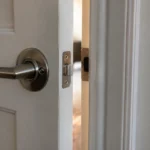
Every closing cycle creates a load. Under normal conditions‚ the closer controls that load so the leaf decelerates and latches without a hard impact. When the final movement becomes too fast‚ the strike area absorbs more force than intended. Hinges and pivots also feel the shock because they must stop the moving weight of the leaf.
The effect can be gradual. Screws loosen‚ mounting holes enlarge‚ strike plates shift and metal edges begin to show polished contact marks. A frame can remain visually intact while its connections are becoming less rigid. The same repeated impact can also damage adjacent glass‚ trim and seals.
- Increasing Noise can be an early warning of changed closing behaviour.
- Loose Hardware often appears after repeated impact cycles.
- Fresh Contact Marks show where the leaf is striking hardest.
- Latch Problems may develop as alignment begins to drift.
- Vibration Around Glass or trim can indicate transferred force.
Closer settings and the final seconds of movement
Many controlled entrances use hydraulic or mechanical closers to manage speed. The first portion of the swing and the final latching section may be adjusted separately. A door can therefore move normally for most of its travel and accelerate only during the last few degrees.
That final phase matters because it should provide enough energy for the latch to engage without causing a hard collision. If it is too slow‚ the leaf may stop against seals and fail to latch. If it is too fast‚ the opening can become noisy and destructive.
Automated systems add another layer of controls‚ sensors and operators. When powered movement becomes abrupt or inconsistent‚ automatic door repair may involve checking not only the operator but also alignment‚ safety detection and the mechanical resistance of the leaf.
Air pressure as an overlooked contributor
A door does not operate in isolation from the building. HVAC systems‚ exhaust fans‚ vestibules and nearby openings can create pressure differences that alter closing behaviour. A closer adjusted during one season may behave differently when heating or cooling systems operate at another airflow setting.
Positive pressure can push an exterior leaf outward and make latching more difficult. Negative pressure can pull the leaf inward and increase closing speed. Wind can add another variable‚ especially on exposed elevations.
A useful diagnostic clue is whether the slamming changes when another nearby entrance is opened. If it does‚ the closer may not be the only factor. Adjusting hardware without considering air pressure can produce a setting that works under one condition but fails under another.
Storefronts and repeated customer traffic
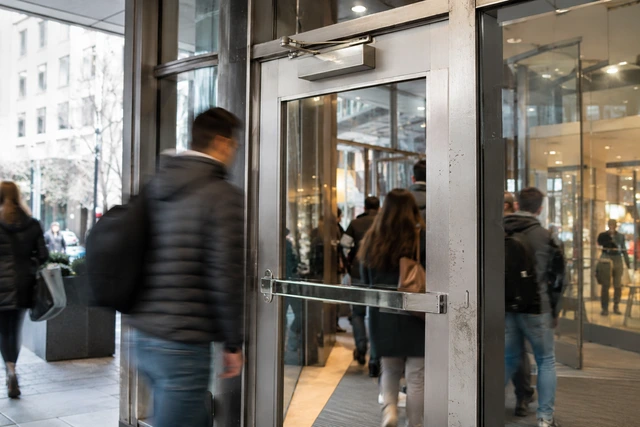
Retail and public-facing entrances often experience concentrated use during certain hours. A door may cycle almost continuously during lunch‚ evening or event periods and then remain quiet for long stretches. This pattern places high loads on closers and pivots during the busiest part of the day.
Glass and aluminum storefront systems also make impact easy to hear and see. Vibration may travel through the frame‚ and misalignment can show up as uneven gaps or rattling panels. Where those symptoms develop together‚ storefront door repair may involve correcting the closing system and the supporting hardware rather than treating noise alone.
The operational cost of a poorly controlled entrance is not limited to parts. Staff may start holding the door‚ customers may hesitate around a fast-closing leaf‚ and a security opening may be propped open to avoid repeated slamming. Each workaround creates a new problem.
Heavy-duty entrances and cumulative fatigue
Industrial and service-area doors are built for demanding use‚ but stronger materials do not eliminate wear. Heavy leaves store more energy while moving‚ so uncontrolled closing can create substantial impact at hinges‚ frames and locking points.
Loading areas‚ utility spaces and production environments may also expose hardware to vibration‚ dust‚ moisture or temperature changes. In these conditions‚ industrial door repair can involve restoring controlled movement before repeated impacts accelerate structural wear.
A maintenance record is particularly useful on high-cycle openings. Notes about closer adjustments‚ hinge replacement‚ impact events and recurring latch issues can show whether the same problem is returning and whether the current components are suitable for the duty level.
The indirect costs of ignoring slamming
Noise is disruptive‚ but unplanned failure is more expensive. A closer that eventually breaks may leave the door difficult to control. A shifted strike can prevent locking. A loose pivot can take the entrance out of service until the opening is stabilized.
There are also comfort and energy consequences. Doors that rebound after slamming may not seal properly. A leaf that remains slightly open can allow conditioned air to escape and can compromise access control. Repeated impact can damage weatherstripping‚ creating drafts even while the door still appears functional.
For properties in the western GTA‚ recurring high-traffic symptoms may lead to work such as door repair in Mississauga‚ where the practical objective is restoring reliable movement before a frequently used entrance becomes a larger operational problem.
A preventive response to changing behaviour
Slamming rarely needs to be accepted as normal. A sensible assessment checks alignment‚ hinge or pivot condition‚ closer mounting‚ speed settings‚ latch engagement and building pressure. The final adjustment should be tested through repeated cycles rather than judged from a single close.
Lawrence Doors can inspect high-use entrances throughout Toronto and the GTA and identify whether the cause is adjustment‚ worn hardware‚ movement or a combination of factors. Correcting the source early helps reduce noise‚ protects surrounding components and keeps busy access points predictable during peak use.