A latch that suddenly needs an extra push is often treated as a small hardware annoyance. In reality‚ it can provide useful information about the condition of the entire opening. The latch sits at the point where the moving leaf‚ lock hardware‚ strike and frame must meet accurately‚ so even modest changes elsewhere can show up there first.
When the mechanism itself is worn or no longer moving freely‚ door lock repair may be appropriate. But a latch that misses the strike does not automatically mean the lock is defective. Before any part is changed‚ it helps to understand whether the real cause is sag‚ frame movement‚ hinge wear‚ closing force or repeated impact.
The latch as a diagnostic point
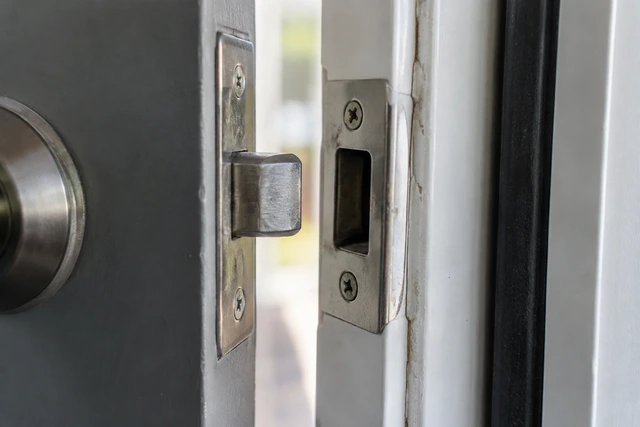
A properly functioning entrance should close along a predictable path. As the leaf reaches the frame‚ the latch bolt should contact the strike smoothly‚ retract and then extend into the opening. If that sequence changes‚ the pattern of contact can reveal what has moved.
A latch that hits below the strike may indicate that the leaf has sagged. Contact above the opening can point to a different shift in geometry. Sideways rubbing may result from a frame that has moved inward or from hardware that no longer holds the leaf at the correct distance.
Fresh marks on the strike plate are particularly useful. They show the actual contact point rather than relying on a visual guess. A small polished line or new scratch can indicate where the alignment has changed.
Hinge wear and gradual sag
Hinges carry the weight of the leaf and repeat the same movement thousands of times. Fasteners can loosen‚ hinge knuckles can wear and mounting points can gradually lose rigidity. The resulting sag may be subtle enough that the entrance still appears straight from a distance.
One common clue is improved latching when the handle is lifted slightly during closing. That does not mean lifting should become the normal operating method. It means the leaf is being manually returned closer to the position where the latch and strike were originally aligned.
If movement involves the surrounding structure rather than only the hinge‚ door frame repair may be more relevant than repeatedly adjusting the strike plate to follow a shifting opening.
- Uneven Gaps can reveal sag before the latch fails completely.
- Loose Fasteners may indicate repeated loading at the hinge side.
- Fresh Metal Marks show where the latch now contacts the strike.
- Scraping Edges can point to movement beyond the lock area.
- Repeated Adjustments suggest the underlying cause has not been resolved.
Frame movement changes more than the latch
A frame is expected to hold a stable geometry around the moving leaf. Building settlement‚ impact‚ moisture‚ corrosion or weakened fastening can alter that geometry. The latch may be the first component to complain‚ but other signs often appear as well.
The perimeter gap may become narrower on one side. Weatherstripping may compress unevenly. The leaf may contact the top corner before the latch side is fully seated. In more advanced cases‚ the frame can flex when the door closes.
Simply enlarging the strike opening may temporarily allow the latch to enter‚ but that approach can reduce the quality of engagement and conceal continuing movement. A durable correction should address why the relationship changed.
Closing force can hide alignment problems
A closer that pushes firmly can make a misaligned entrance appear functional for a while. The latch may be driven into the strike despite resistance‚ especially on a frequently used opening. This can create a misleading impression that the problem is solved.
Repeated impact increases wear at the latch edge and strike. It can also loosen hardware or cause the leaf to rebound. The closing system should provide controlled movement‚ not brute force.
On main entrances‚ changes in closing behaviour may coincide with other visible wear. When the problem affects the primary access point‚ front door repair can involve evaluating hinges‚ locks‚ seals and alignment together rather than treating the latch as an isolated part.
Different materials show stress differently
Wood‚ aluminum and steel assemblies respond differently to use and weather. Wood can swell or split around fasteners. Aluminum can distort at connection points or show wear around pivots. Steel can remain structurally strong while hinges‚ closers and frame connections accumulate fatigue.
Heavy-duty metal entrances often continue operating even when alignment is no longer ideal‚ which can allow wear to progress unnoticed. Where a robust metal leaf is binding‚ sagging or striking incorrectly‚ steel door repair may involve correcting the supporting hardware and clearances that allow the lock to engage properly.
The material itself therefore matters‚ but the diagnostic principle stays the same: the latch is only one point in a larger mechanical system.
What repeated latch adjustment can indicate?
A strike plate that needs to be moved once after years of use is not necessarily concerning. A plate that must be repositioned every few months deserves more attention. Repeated correction implies that the geometry is continuing to change.
Potential causes include:
- Hinge Wear that allows progressive sag.
- Frame Movement caused by loose or deteriorated connections.
- Impact Damage from carts‚ deliveries or forced closing.
- Seasonal Changes that reveal marginal clearances.
- Closer Problems that repeatedly drive the leaf into the frame.
Keeping a simple maintenance record can make patterns easier to see. Dates‚ photographs and notes about weather or recent impacts can help distinguish a one-time adjustment from ongoing deterioration.
Security depends on full engagement
A door can appear shut while the latch is only partially engaged. That condition matters because security depends on more than the visual position of the leaf. The bolt needs to enter the strike far enough to perform as intended‚ and the frame needs to remain stable under normal pressure.
A soft click‚ shallow engagement or need for an extra pull should not become accepted as normal. If the leaf can be pushed open without operating the handle‚ or if the lock works only when the door is lifted‚ the opening is signalling a mechanical problem.
Local building age and exposure can influence how those problems develop. For example‚ door repair in Richmond Hill may involve newer commercial assemblies‚ older entrances or weather-exposed residential systems‚ but the same alignment checks remain useful across property types.
A better response than trial and error
Randomly moving the strike‚ tightening every visible screw or increasing closer force can change the symptom without identifying the cause. A more systematic inspection begins with the leaf position‚ hinge side and frame‚ then follows the closing path to the latch and lock.
That order helps determine whether the lock needs service or is simply reacting to movement elsewhere. It also reduces unnecessary component changes and makes it easier to choose a proportionate correction.
Lawrence Doors can assess entrances that have become difficult to latch across Toronto and the GTA‚ explain where the alignment has changed and identify the practical work required to restore dependable closing. A latch problem is often small‚ but the information it provides about the rest of the opening can be valuable.