Automated entrances combine convenience‚ accessibility and controlled access‚ but their safety depends on more than the operator that moves the door. Sensors‚ pivots‚ closers‚ control settings‚ locks and the surrounding opening all need to work together so movement remains predictable around people and property.
When a powered entrance hesitates‚ moves unexpectedly or no longer responds consistently‚ automatic door repair may be necessary. Building owners should treat those changes as safety information rather than waiting for a complete shutdown‚ especially on high-traffic entrances.
Detection and safe movement
Automatic doors rely on sensors to identify approaching or occupying users. Detection zones need to cover the intended path without creating excessive false activation.
A sensor that responds intermittently may leave users uncertain about whether the door will open. A door that begins closing while someone remains in the path can create a more serious risk.
Routine observation should include whether the system activates consistently from normal approach angles and whether the door remains open long enough for typical users to pass comfortably.
Mechanical condition behind electronic behaviour
Not every apparent sensor problem is electronic. A door can receive the correct command and still move poorly because pivots are worn‚ the leaf is rubbing or the frame has shifted.
Where a business entrance shows both access and mechanical issues‚ commercial door repair may address the underlying opening while automated controls are evaluated separately.
- Jerky Movement may indicate mechanical resistance.
- Delayed Opening can result from controls or physical binding.
- Uneven Closing can point to alignment issues.
- Unexpected Reversal may involve safety detection or resistance.
- New Noise deserves attention before continued cycling adds wear.
Storefront traffic and public-facing risk
Automated storefront entrances often cycle continuously during busy periods. Repetition magnifies small faults and exposes the system to carts‚ deliveries and accidental impacts.
Where the retail entry has become loose‚ misaligned or unreliable‚ storefront door repair may be required alongside operator service.
A safety program should therefore look at the complete entrance rather than separating the powered mechanism from the leaf and frame it controls.
Glass doors and visibility around movement zones
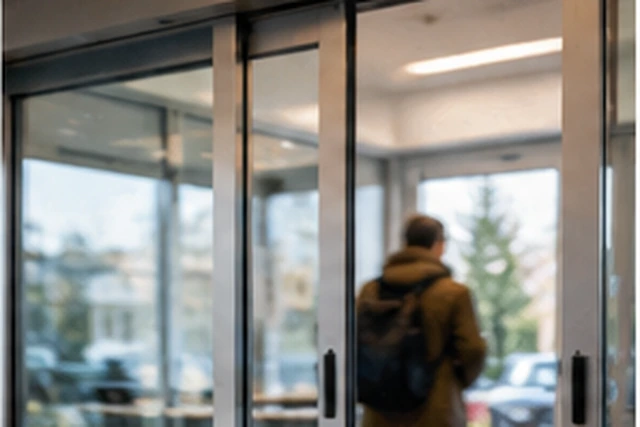
Glass is common in automated entrances because it supports visibility and natural light‚ but the glazing must remain stable within a frequently moving system.
Rattling‚ chips‚ loose fittings or changing gaps can indicate stress. Where glazing-related issues develop‚ glass door repair may be part of restoring safe operation.
Markings and visibility also matter. Large transparent panels should remain easy to perceive so users can understand the path of movement.
Closing speed and force
Automated movement should feel controlled rather than abrupt. Changes in speed can result from operator settings‚ resistance in the opening or environmental conditions such as wind and building pressure.
Increasing power to overcome a binding leaf is not a durable solution. Mechanical resistance should be corrected first so the operator is not forced to work harder than intended.
Repeated cycles should be observed after any adjustment to confirm that the system behaves consistently.
Accessibility and predictable operation
Automated entrances often serve users who rely on them for accessible entry. Reliability therefore matters beyond convenience.
Activation devices‚ approach sensors and timing should support a range of users‚ including people moving slowly or using mobility aids. A system that works only under ideal conditions may still create barriers during real use.
Building owners should also ensure that changes to adjacent mats‚ furniture or displays do not interfere with approach paths or detection zones.
Weather and local operating conditions
Cold weather‚ salt‚ moisture and wind can alter door resistance and sensor surroundings. Seasonal changes may make a marginal mechanical problem more obvious.
For properties north of Toronto‚ service such as door repair in Aurora may involve checking local exposure and alignment alongside automated components.
A maintenance approach centred on safe behaviour
Automated entrance safety is easier to manage when changes are noticed early. Building staff do not need to diagnose controls‚ but they can report new hesitation‚ unusual speed‚ impact‚ noise or incomplete closing.
Lawrence Doors can assess automated and high-traffic entrances across Toronto and the GTA and identify whether problems originate in the operator‚ sensors‚ hardware or surrounding opening. Consistent movement and reliable detection are the practical signs that the system is doing its job safely.