A forced-entry incident changes the priorities around an entrance immediately. The first concern is safety and site control‚ but the next step is understanding what was actually damaged. A door can remain hanging in the opening while the frame‚ strike‚ lock‚ glass or hinge side has been compromised enough to make the entry unsafe or insecure.
Where the opening cannot be secured normally‚ emergency door repair may be required to stabilize the situation. Property teams can also make the assessment more efficient by documenting the condition carefully before debris is moved or temporary work changes the evidence.
Immediate safety around the opening
Before testing the door‚ the surrounding area should be checked for hazards. Broken glass‚ sharp metal‚ loose hardware and unstable frame sections can create injury risks. A leaf that is hanging out of alignment may also move unexpectedly.
Access should be controlled until the opening is known to be safe. If the damaged entry is on a public route‚ clear temporary barriers or signage may be necessary while professional help is arranged.
- Broken Glass should be treated as a hazard zone.
- Loose Hardware should not be handled unnecessarily.
- Unstable Leaves may shift or fall under their own weight.
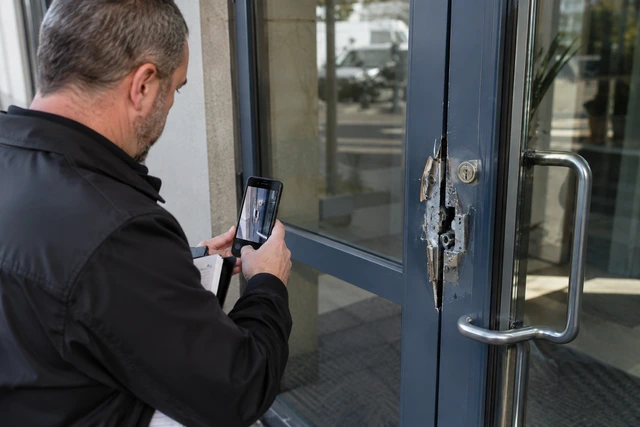
- Photographs Should be taken before major cleanup.
- Alternative Access should remain clear and secure.
Frame damage around the strike side
Forced entry often concentrates energy at the locking point. Wood can split‚ metal can bend and anchors can pull away from the surrounding wall. The door may still close‚ but the frame may no longer provide a strong point for the lock to engage.
Where the supporting structure is too damaged to hold secure hardware‚ door frame replacement may become necessary. The decision should be based on material condition and anchoring rather than simply whether the door can be pushed shut.
Photographs of the strike area‚ cracks‚ deformation and fastener movement are useful for both technical assessment and insurance documentation.
Lock condition after impact
A lock can appear functional after an incident while internal parts or mounting points have been stressed. The bolt may extend with the door open but fail to align once the leaf reaches the frame.
If the lock body‚ cylinder or associated hardware has been damaged beyond reliable service‚ door lock replacement may be more appropriate than trying to reuse compromised components.
Testing should include several closing and locking cycles after the frame is stabilized. A one-time successful lock does not prove that the system will remain dependable under repeated use.
Glass and glazing hazards
Break-ins involving glazed doors or sidelites require additional caution. Cracked safety glass may remain in place temporarily but can release fragments when disturbed. Damaged stops‚ gaskets or frames can also leave a panel less secure than it appears.
Where the glass cannot be safely retained‚ glass door replacement may be required after the opening has been stabilized and measured correctly.
Property teams should avoid taping or pushing damaged glass in ways that make professional removal more difficult. Temporary securing methods should prioritize containment and public safety.
Hinge-side damage and hidden misalignment
The locking side receives obvious attention‚ but force can travel across the entire leaf. Hinges‚ pivots and closer mounts should be checked for looseness or distortion. A door that was forced against its normal direction of movement may shift on the hinge side even if no visible break is present.
Uneven gaps after the incident are an important clue. If the top corner now rubs or the bottom edge drags‚ the leaf may have moved relative to the frame.
Closer behaviour should also be reviewed. A bent arm or loosened bracket can cause slamming or prevent full closure after the immediate security issue appears resolved.
Documentation for insurance and follow-up
A simple record helps separate incident damage from pre-existing wear. Useful information includes photographs‚ time of discovery‚ visible point of entry‚ hardware found on the ground and any changes in operation noticed afterward.
The opening should be photographed from both close range and several steps back. Wider images show overall alignment‚ while detailed images capture lock‚ frame and glass damage.
For properties west of Toronto‚ urgent incidents may result in work such as door repair in Brampton‚ but the same documentation principles apply regardless of location.
Temporary securing versus permanent correction
The first service visit may focus on making the opening safe and secure rather than completing every cosmetic detail. Temporary stabilization can be appropriate when special parts or glass need to be ordered.
The permanent follow-up should confirm frame integrity‚ alignment‚ locking performance‚ closing behaviour and weather sealing. Any temporary reinforcement should be removed or incorporated properly rather than becoming an indefinite workaround.
Lawrence Doors can respond to forced-entry damage throughout Toronto and the GTA‚ stabilize affected openings and identify which components can be restored and which should be changed. A structured post-incident check helps property teams move from immediate security to reliable long-term operation without overlooking hidden damage.