Winter entrances in the GTA are exposed to far more than low temperatures. Snowmelt‚ salt‚ grit‚ repeated freezing and thawing‚ wet footwear and strong temperature differences between indoors and outdoors all affect the materials around an entry. These forces are routine‚ but over time they can change how the door moves‚ seals and latches.
When weather-facing components begin sticking‚ corroding or losing alignment‚ exterior door repair may address the damage that seasonal exposure has created. The larger lesson is that winter wear is rarely limited to one component. Thresholds‚ frames‚ fasteners‚ closers‚ seals and hardware all interact‚ so problems often appear as a combination of small symptoms.
Salt as a corrosive maintenance problem
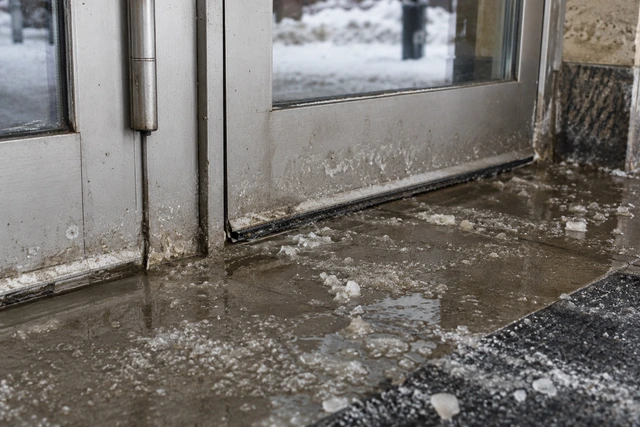
Road salt and de-icing products are useful for safety‚ but residue does not remain only on sidewalks. It is carried into entrances by footwear‚ carts and melting snow. Fine salt particles collect around thresholds‚ lower frames and hardware where they can hold moisture against metal.
Over time‚ protective finishes may break down and corrosion can develop around screws‚ pivots or exposed edges. The first sign may be cosmetic‚ but corrosion can eventually affect movement and fastening strength.
Routine cleaning is therefore more than a matter of appearance. Salt should be removed before it remains damp for long periods‚ particularly at entrances that receive heavy pedestrian traffic.
Aluminum systems and winter exposure
Aluminum is widely used because it is light‚ durable and resistant to many forms of corrosion‚ but it is not immune to wear. Hardware connections‚ pivots‚ fasteners and contact points can still deteriorate when moisture and salt remain trapped around them.
A leaf may also begin rubbing if surrounding components shift with temperature. Where the problem involves distortion‚ loose pivots or worn hardware‚ aluminum door repair may restore alignment without assuming that the entire system needs replacement.
The condition of drainage paths matters as well. Water that cannot escape from the threshold area is more likely to freeze and create repeated stress.
Freeze-thaw cycles and small movements
Water expands when it freezes. If moisture reaches cracks‚ joints or gaps around a threshold or frame‚ repeated freezing and thawing can enlarge those weaknesses gradually. The movement may be too small to see directly‚ but the door can reveal it through changing clearances.
- New Scrape Marks can indicate seasonal movement.
- Uneven Gaps may appear after repeated temperature swings.
- Loose Thresholds can result from expansion and contraction.
- Cracked Sealant may allow more water into the opening.
- Intermittent Latching can be an early alignment clue.
A problem that disappears during a mild spell and returns after another freeze is useful evidence. It suggests that temperature and moisture are affecting a marginal condition within the opening.
Steel hardware and accumulated corrosion
Steel entrances and components are designed for strength‚ but damaged coatings or exposed fasteners can become vulnerable to moisture and salt. Corrosion can increase friction‚ weaken connections and make adjustment more difficult.
Where a heavy metal leaf begins sagging‚ binding or showing deterioration at hinges and frame connections‚ steel door repair can focus on the mechanical consequences rather than only the visible rust.
The most important areas are often not the broad flat surfaces but the points where forces are concentrated: hinge leaves‚ pivots‚ closer brackets‚ strike plates and lower edges.
Frame condition around wet thresholds
Water commonly collects at the lower part of an opening‚ especially when snow is tracked indoors or exterior drainage is poor. If the frame material or its anchors deteriorate‚ the leaf may begin moving relative to the strike and threshold.
In that situation‚ repeated latch adjustment does not solve the actual cause. door frame repair may be needed where the supporting structure remains recoverable but has lost alignment or secure fastening.
Inspection should include the condition of sealant‚ adjacent flooring and any signs of staining‚ swelling or corrosion. Moisture problems become easier to manage when identified before another winter cycle.
Slush‚ grit and mechanical resistance
Winter debris can create direct resistance even without permanent damage. Packed grit under a sweep‚ frozen slush around a threshold or salt crystals near a pivot can make the door feel heavier and can alter closer performance.
A cleaner opening is easier to diagnose. Removing debris first helps determine whether the problem is environmental or mechanical. If movement remains poor after cleaning‚ wear or misalignment becomes more likely.
Maintenance teams should also avoid forcing a door through frozen resistance. Extra force can bend hardware‚ damage seals or loosen components that were otherwise intact.
Exposure differences across nearby properties
Winter conditions are highly local. An entrance facing prevailing wind can receive much more snow than one under a canopy. A busy street-facing opening may collect salt continuously‚ while a sheltered side door stays comparatively dry.
For GTA properties‚ services such as door repair in Vaughan may involve the same basic mechanical principles as elsewhere‚ but orientation‚ traffic and building design still influence which components wear first.
Seasonal maintenance before damage compounds
A practical winter routine includes removing salt residue‚ keeping thresholds clear‚ checking drainage‚ monitoring weatherstripping and watching for new changes in alignment. Spring is a good time to compare the opening with its pre-winter condition and document any new wear.
Lawrence Doors can inspect winter-related entrance problems throughout Toronto and the GTA and identify whether the issue is temporary debris‚ adjustment‚ corrosion‚ frame movement or damaged hardware. Seasonal exposure cannot be eliminated‚ but its effects can be managed before repeated cycles turn small defects into larger failures.